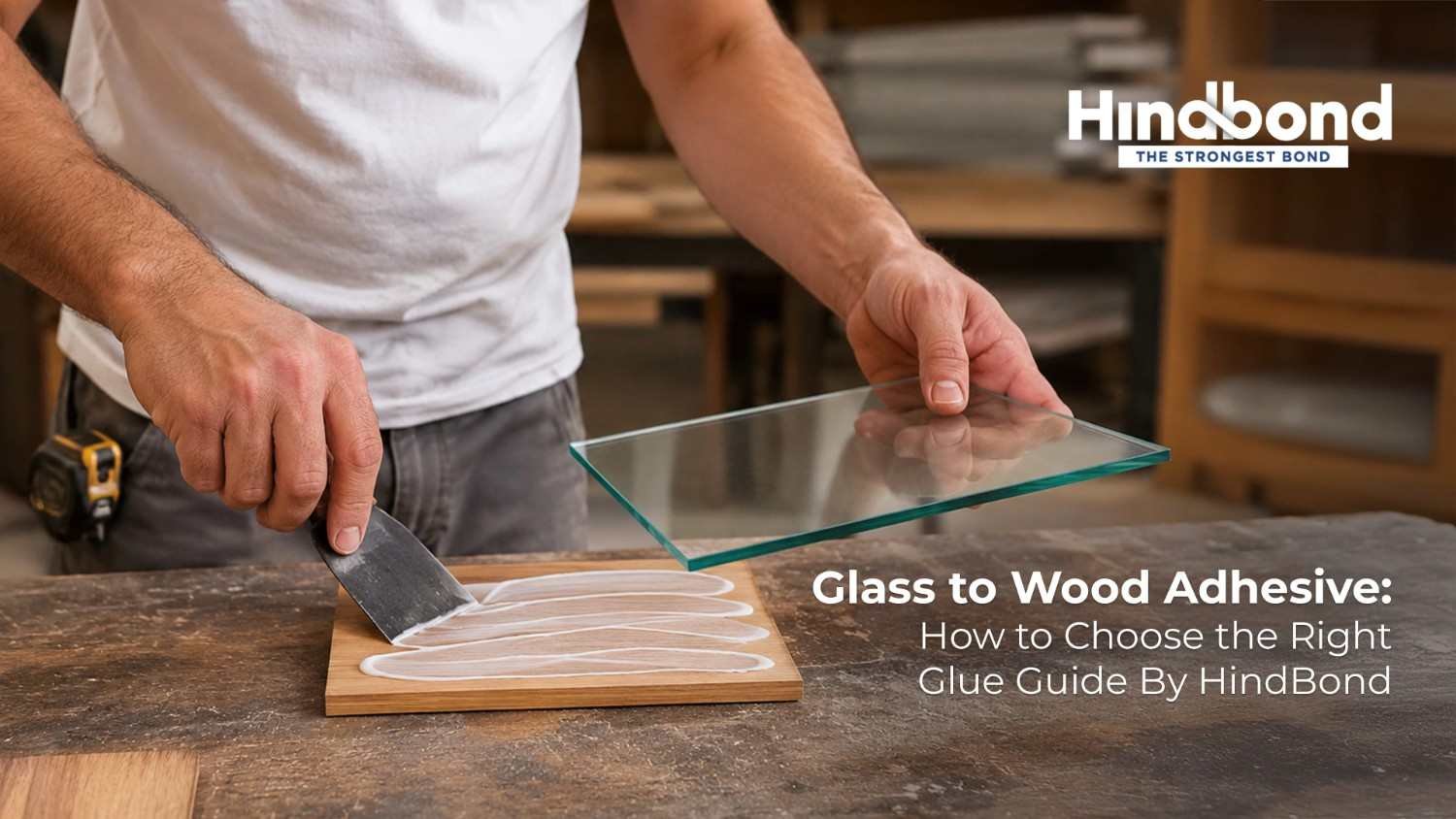
Bonding glass to wood requires careful adhesive selection because these two materials have different surface properties. Glass is smooth and non-porous, while wood can be porous, absorbent and affected by moisture. Using an unsuitable adhesive may result in weak bonding, poor adhesion or joint failure over time.
The right glass to wood adhesive depends on the type of glass, wood surface, size of the bonding area and the conditions in which the finished item will be used. Whether you are assembling decorative furniture, attaching a glass panel to a wooden frame or working on an interior project, understanding these factors can help you make a more suitable choice.
This guide explains the adhesive options, important selection factors, surface preparation steps and common mistakes to avoid when bonding glass to wood.
What Is the Best Adhesive for Bonding Glass to Wood?
There is no single adhesive that is suitable for every glass-to-wood application. The right choice depends on the joint design, required bond strength, flexibility, appearance and environmental conditions.
Some adhesive categories used in glass-bonding applications include:
- Epoxy adhesives: Often considered for rigid bonding applications where a strong, durable joint is required. Check that the specific formulation is compatible with both glass and the type of wood.
- Silicone adhesives: Certain silicone formulations can provide flexible bonds and accommodate some movement between materials. They are not automatically suitable for structural or load-bearing applications.
- Polyurethane adhesives: Some formulations are designed for bonding different materials and may be suitable where the product documentation confirms compatibility with glass and wood.
- Specialised multi-surface adhesives: These are formulated for bonding different substrate combinations. Always check whether the manufacturer specifically lists both glass and wood as compatible surfaces.
The best option is the adhesive whose technical documentation supports your particular materials and application.
Why Is Bonding Glass to Wood Different?
Glass and wood behave differently when an adhesive is applied.
Glass has a smooth, non-porous surface. This means the adhesive cannot penetrate it in the same way it may penetrate a porous material.
Wood has a porous surface. Its absorption and surface condition can vary depending on whether it is solid wood, plywood, MDF, veneer or a coated wooden panel.
There may also be differences in movement when temperature and humidity change. Wood can expand or contract with moisture variations, while glass behaves differently.
For these reasons, an adhesive that works well for wood-to-wood bonding may not necessarily be suitable for glass-to-wood bonding.
5 Factors to Consider When Choosing a Glass to Wood Adhesive
Before selecting an adhesive, evaluate the following factors.
1. Compatibility With Both Materials
Check whether the adhesive is specifically suitable for bonding glass and the type of wood being used.
Do not assume that an adhesive suitable for glass alone or wood alone will automatically work for both materials.
If you are working with MDF, plywood, veneer or painted wood, check the product instructions for compatibility with that particular surface.
2. Bond Strength and Application Requirements
Consider how the bonded parts will be used.
For example:
- A small decorative glass piece may have different bonding requirements from a large glass panel.
- A furniture component may experience repeated handling or movement.
- A glass shelf or overhead glass panel may require mechanical support in addition to adhesive.
Choose an adhesive based on the actual load, joint design and manufacturer's recommendations. Do not rely on a general adhesive recommendation for safety-critical or load-bearing applications.
3. Transparency and Appearance
The appearance of the adhesive matters when the joint remains visible.
Some adhesives dry clear, while others leave a white, opaque or coloured bond line. If the adhesive will be visible through or around the glass, check its final appearance before use.
For decorative applications where appearance is important, test the adhesive on a small sample first.
4. Flexibility and Environmental Conditions
Consider where the bonded item will be used.
Will it remain indoors? Will it be exposed to sunlight, heat, humidity or regular cleaning?
Some applications may require a degree of flexibility to accommodate movement between the materials. Others may require a more rigid bond.
Check the product's technical documentation for temperature limits, moisture resistance and suitability for the intended environment. Do not assume that every glass-compatible adhesive is suitable for outdoor use.
5. Application Method and Curing Time
Adhesives differ in their application methods, working time and curing requirements.
Before starting, check:
- Whether the adhesive should be applied to one surface or both.
- Whether a particular application thickness is recommended.
- How long the parts must remain supported or clamped.
- When the joint can be handled or subjected to load.
- Whether ventilation or other safety precautions are required.
Remember that drying time and full curing time are not necessarily the same. Follow the manufacturer's instructions before using the bonded item.
How to Prepare Glass and Wood Before Applying Adhesive
Surface preparation plays an important role in bonding performance. Even a suitable adhesive may not perform as expected if the surfaces are dirty, oily, dusty or poorly prepared.
Prepare the Glass Surface
- Remove dust, fingerprints, grease and other surface contaminants.
- Clean the bonding area using a glass-cleaning method compatible with the adhesive instructions.
- Allow the surface to dry completely.
- Avoid touching the prepared bonding area with your fingers.
Prepare the Wood Surface
- Make sure the wood is clean and dry.
- Remove loose dust, dirt, grease or flaking coatings.
- Check that the surface is stable and free from loose particles.
- Follow the adhesive manufacturer's recommendations for sanding, priming or other surface treatment, if required.
For painted, polished or laminated wood, verify that the adhesive is compatible with the actual finish rather than just the underlying wood.
Step-by-Step Guide: How to Apply Glass to Wood Adhesive
Once you have selected a compatible adhesive and prepared both materials, follow the product-specific application instructions.
Step 1: Check the fit
Position the glass against the wood without applying adhesive. Check that both surfaces align correctly and that the joint design provides adequate contact.
Step 2: Prepare both surfaces
Clean and dry the glass and wood. Make sure there is no dust, oil or loose material in the bonding area.
Step 3: Apply the adhesive
Apply the adhesive according to the manufacturer's recommended quantity, coverage and application method. Avoid using excessive adhesive, as this can affect the appearance and quality of the joint.
Step 4: Position the materials
Carefully bring the glass and wood together. Avoid unnecessary movement once the surfaces make contact.
Step 5: Provide support
Keep the bonded parts properly supported during the recommended setting and curing period. Use a support method that does not damage or put excessive pressure on the glass.
Step 6: Allow the adhesive to cure
Follow the manufacturer's specified curing time before handling or loading the bonded assembly. Do not assume that the surface being dry means the bond has reached its final strength.
Common Mistakes to Avoid When Bonding Glass to Wood
Avoid these mistakes to improve the chances of achieving a reliable bond:
- Using ordinary wood glue without checking compatibility: Many conventional woodworking adhesives are designed for porous wood surfaces and may not be suitable for glass.
- Ignoring surface preparation: Dust, oil, moisture and loose coatings can interfere with adhesion.
- Choosing adhesive based only on strength: Flexibility, appearance, material compatibility and environmental conditions also matter.
- Applying too much adhesive: Excess adhesive can create an uneven joint or visible residue.
- Moving the materials too early: Movement during the setting period may disturb the bond.
- Ignoring curing instructions: Handling or loading the assembly before the recommended curing period can affect performance.
- Using adhesive as the only support for heavy glass: Large, overhead or safety-critical glass installations may require mechanical fixings or a professionally designed support system.
Is HindBond 7 Star Suitable for Glass-to-Wood Bonding?
HindBond 7 Star is a water-based synthetic multi-surface adhesive. Its product information lists both glass and wood-based materials, including plywood, veneer and MDF, among its compatible surfaces. It is therefore an option to evaluate for suitable glass-to-wood applications.
However, the right choice still depends on the specific project. The product has an opaque or milky-white appearance, so it may not be appropriate where a completely transparent adhesive joint is required.
Before using it, review the product instructions, prepare the surfaces as recommended and conduct a small compatibility and bonding test under your actual application conditions.
For more information, refer to the HindBond 7 Star Adhesive product details.
When Should You Avoid Using Adhesive Alone?
Adhesive alone may not be appropriate for every glass-to-wood application.
Consider additional mechanical support or professional installation when:
- The glass panel is large or heavy.
- The installation is overhead or vertical and failure could cause injury.
- The glass is part of a shelf, railing, door or other load-bearing structure.
- The assembly is exposed to significant vibration, repeated impact or changing environmental conditions.
- The adhesive manufacturer's documentation does not confirm suitability for the intended application.
For safety-critical installations, use a properly designed mechanical fixing or support system rather than relying only on an adhesive bond.
Choose the Right Adhesive for Your Glass-to-Wood Application
Choosing a suitable glass-to-wood adhesive involves more than comparing product names or advertised strength. Material compatibility, surface preparation, joint design, appearance and environmental conditions all influence the result.
Review the technical documentation before application and test the adhesive on representative materials whenever possible.
Explore the HindBond product range or contact the HindBond team to discuss your glass-to-wood bonding requirements and find an adhesive suited to your application.
Frequently Asked Questions
1. What is the best glue for sticking glass to wood?
The best glue depends on the glass type, wood surface, joint design and application conditions. Epoxy, certain silicone and polyurethane formulations, and specialised multi-surface adhesives may be considered when their manufacturers confirm compatibility with both materials.
2. Can you use wood glue to stick glass to wood?
Most conventional wood glues are designed primarily for porous wood-to-wood bonding. They should not be assumed suitable for glass. Choose a product whose technical documentation specifically supports glass and wood bonding.
3. Does glass-to-wood adhesive dry clear?
Not always. Some adhesives dry clear, while others have an opaque or coloured appearance. Check the product's stated final appearance and test it if the joint will remain visible.
4. How do you prepare glass before applying adhesive?
Remove dust, grease and fingerprints using a compatible cleaning method. Allow the glass to dry completely and avoid touching the bonding area before applying the adhesive.
5. Can glass be bonded to MDF or plywood?
Yes, certain adhesives can be used for glass-to-MDF or glass-to-plywood applications. However, compatibility with the specific board, surface finish and glass must be confirmed before use.
6. How long does glass-to-wood adhesive take to cure?
Curing time varies by adhesive formulation, application thickness, temperature, humidity and material combination. Follow the manufacturer's instructions and distinguish between initial setting, drying and full curing.
7. Can glass-to-wood bonding be used outdoors?
Only use an adhesive when its technical documentation confirms suitability for the expected outdoor conditions, including moisture, temperature changes and sunlight exposure. Additional mechanical support may also be necessary.