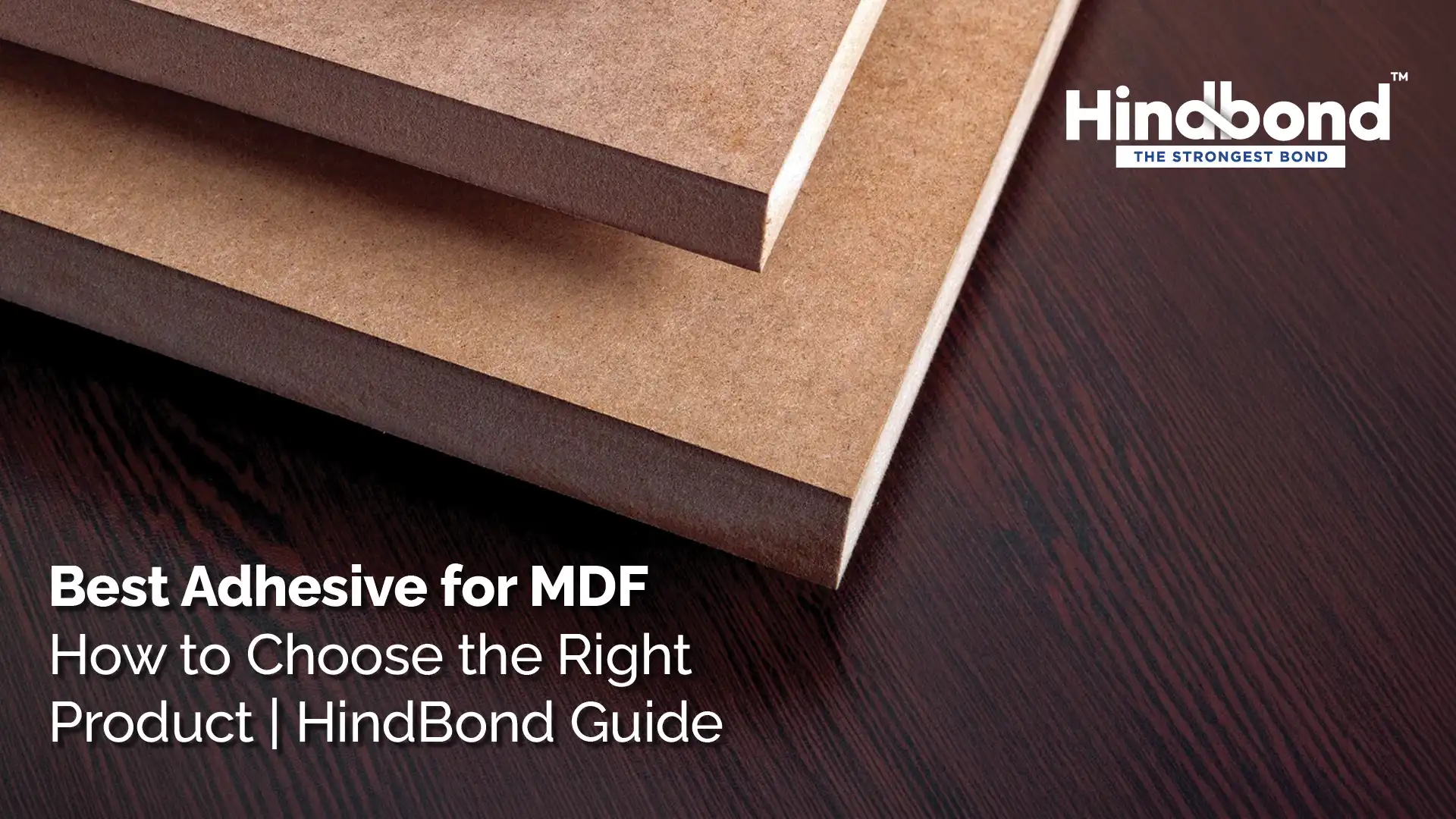
MDF can look perfectly uniform on the surface, but bonding it is not always as straightforward as its smooth appearance suggests. Its engineered fibre structure, absorbent edges, large bonding surfaces, and different finishing materials create specific demands for an adhesive. In furniture production, using the wrong adhesive can result in weak joints, laminate lifting, excessive adhesive consumption, or unnecessary rework. Choosing the best adhesive for MDF therefore starts with understanding the actual bonding application-whether it involves MDF-to-MDF assembly, laminating, edge work, or bonding MDF to another substrate.
Why Does MDF Need the Right Adhesive?
Medium-density fibreboard is manufactured from wood fibres bonded into dense, consistent panels. Unlike natural timber, MDF has no grain structure, while its cut edges can absorb adhesive more readily than the panel face.
An adhesive for MDF should consequently provide good surface contact and develop a dependable bond without being selected solely on initial tack.
For furniture manufacturers, the appropriate MDF board adhesive also needs to fit production parameters such as application method, pressing time, moisture exposure, temperature, and the material being fixed onto the board.
Which Adhesive Is Best for MDF?
There is no single formulation suitable for every MDF operation. The answer to which adhesive is best for MDF depends primarily on the substrates being joined and the finished furniture's service conditions.
MDF-to-MDF Bonding
For joining MDF components, a compatible wood adhesive for MDF, including suitable synthetic resin adhesive formulations, can provide effective bonding. Proper adhesive coverage and adequate pressure during setting are important, particularly around absorbent cut edges.
MDF and Decorative Laminate Bonding
An adhesive for bonding MDF boards with decorative laminates needs good spreadability and sufficient working time for accurate positioning. The adhesive should also be selected according to the laminate material, panel size, pressing process, and expected exposure conditions.
MDF in Moisture-Prone Furniture
Kitchen units, utility furniture, and furniture installed in humid locations require additional consideration. In such cases, the moisture resistance of both the MDF grade and adhesive system should be evaluated. Using a moisture-resistant adhesive cannot compensate for an MDF board that itself is unsuitable for the environment.
How to Select the Best Glue for MDF Board
Rather than purchasing an MDF adhesive based on a general "strong bond" description, furniture manufacturers should assess the following factors:
- Substrate combination: Determine whether the application is MDF-to-MDF, MDF-to-laminate, MDF-to-plywood, or another combination.
- Face or edge bonding: MDF edges and faces behave differently during adhesive application because cut edges tend to be more absorbent.
- Open and setting time: The best glue for MDF board should provide workable application and assembly time suited to the production process.
- Moisture conditions: Consider whether the furniture will remain in a dry interior or encounter humidity and occasional moisture.
- Heat exposure: Furniture near kitchens, windows, or other heat-prone areas may require an adhesive selected for the expected temperature conditions.
- Application process: Manual spreading and production-scale furniture manufacturing can have different requirements for viscosity, coverage, and working time.
MDF Adhesive Selection for Furniture Manufacturing
Consistency becomes particularly important when adhesive is being applied to hundreds of panels rather than one individual piece of furniture. An adhesive for MDF furniture manufacturing should support repeatable application, appropriate coverage, reliable curing, and the required bond performance.
Manufacturers should also follow the adhesive supplier's recommendations for surface preparation, application quantity, pressing, and curing. Adding more adhesive than required does not automatically create a stronger joint and can increase consumption without improving performance.
Which HindBond Adhesive Is Best for MDF?
The best adhesive for MDF from HindBond depends on the type of furniture work, substrates being joined, and expected service conditions. For regular MDF furniture and woodworking requirements, HindBond 7 Star Adhesive and HindBond HB3 are two key options to consider.
HindBond 7 Star can be considered for furniture and woodworking applications where a dependable adhesive is required for routine bonding work. HindBond HB3 Adhesive provides another option for professional woodworking and furniture applications, allowing manufacturers and carpenters to select the formulation that better matches their specific bonding process.
For MDF work, product selection should also consider whether the job involves MDF-to-MDF assembly, laminate bonding, edge work, or MDF combined with another material. HindBond's broader portfolio includes synthetic resin, waterproof, heat-resistant, PVC, and other specialised adhesive categories, making it possible to select products according to the demands of the application rather than treating every MDF bond in the same way.
Conclusion
Choosing an MDF board adhesive is ultimately an application-specific decision. MDF density, edge absorption, mating material, moisture, temperature, pressing, and production speed can all influence the result. Evaluating these conditions before selecting the product helps manufacturers achieve cleaner, more consistent furniture assembly while controlling adhesive consumption and rework.
Find the Right HindBond Adhesive for Your MDF Application.
Choose a HindBond wood adhesive suited to your substrate, application process, and performance requirements.
FAQs
1. What is the best adhesive for MDF?
A: The best adhesive for MDF is one that is compatible with the bonding surfaces and suitable for the required moisture, heat, curing, and application conditions. The right choice also depends on whether MDF is being bonded to MDF, wood, laminate, or another substrate.
2. Which adhesive is best for MDF furniture?
A: A suitable wood or synthetic resin adhesive can be used for MDF furniture, depending on the MDF grade, substrates, production process, and service conditions. The adhesive should provide reliable bonding and suit the required pressing and curing conditions.
3. Which adhesive is used for MDF furniture manufacturing?
A: MDF furniture manufacturers commonly use suitable wood and synthetic resin adhesives for assembly and bonding applications. Specialised applications such as laminating, edge bonding, or bonding MDF to other substrates may require specific adhesive formulations.
4. What type of adhesive is suitable for MDF boards?
A: An adhesive suitable for MDF should provide good surface contact, appropriate penetration, sufficient working time, and reliable bond performance. The formulation should also match the MDF application and environmental conditions.
5. Can wood adhesive be used on MDF?
A: Yes, a compatible wood adhesive can be used on MDF, particularly for MDF-to-MDF bonding. Proper surface preparation, adhesive application, pressing, and curing conditions are important for achieving a strong and durable bond.
6. How do you choose the right adhesive for MDF?
A: Consider the MDF grade, substrates being bonded, face or edge bonding requirements, moisture and heat exposure, application method, open time, pressing requirements, curing conditions, and the final use of the furniture before selecting an adhesive.